Mark Skalla. Take the assessment
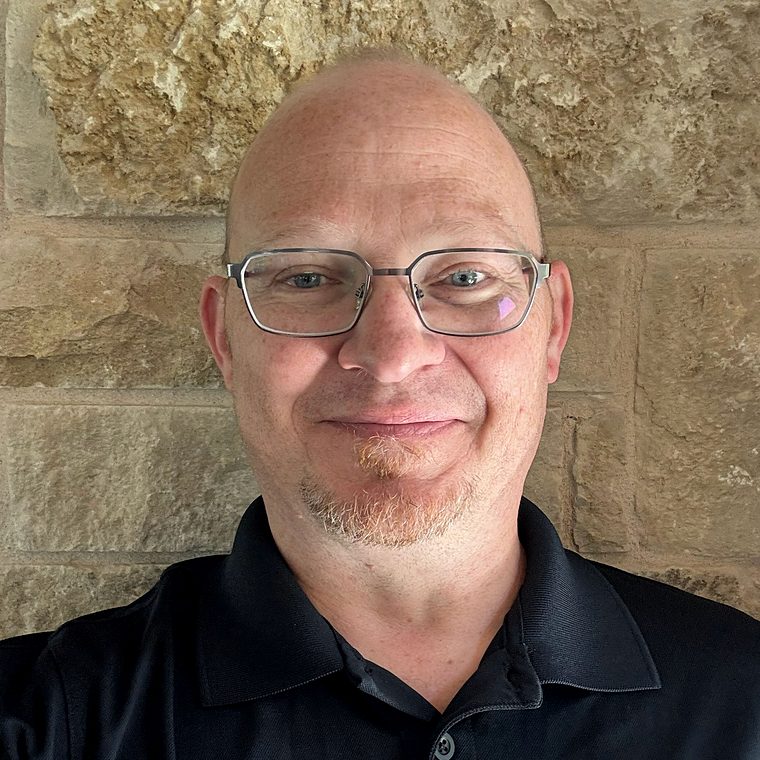
Hi, I'm Mark. Fractional COO and CMO. I help founders get out of their own way.

Most growing companies don't break in one place. They break where two things meet.

Marketing gets good and delivery cracks under the weight. Or delivery runs smooth and quiet, and it's quiet because marketing stopped pushing. Those feel like two different problems. They're the same one, and I've spent twenty years on both sides of it.

Mark Skalla, fractional COO and founder of Fulcrum Fractional
20years inside founder-led companies
$249Min loan volume from one system I built
$800Kprofit swing in two years at a company I ran
75people, three years, my name on the P&L
Why businesses stall

Marketing and operations don't fail on their own. They fail against each other.

Geologists have a word for the place where two sections of ground move in different directions. That's a fault line, and it's where the damage shows up. Companies work the same way.

Your marketingYour operations
The Front Range at night above the rock beneath it, cut and displaced along a fault line. The left side is labelled marketing, the right side operations.
That line is the fault. Same rock on both sides, the same range on top. One half just got pushed up past the other, and everything above it moved too.

The Front Range I look at every morning exists because of a fault. The pressure that breaks things is the same pressure that builds them. Which side you land on depends on whether anyone was watching the seam.

If you're growing

Demand is outrunning the machine.

Marketing is working. Delivery is cracking. You're back in quality control just to keep things moving, and margin is leaking somewhere nobody can quite name. Every instinct says hire. The actual answer is usually to redesign.

If you're flat

The machine is fine. Nothing is testing it.

Operations is calm. Revenue isn't moving. You're not sure if it's the product, the team, or you. It's usually none of the three. Nothing upstream is pushing hard enough to make the business grow.

Most founders can tell me which one feels true. Fewer can tell me which one is true. The gap between those two answers is usually the whole job.

Free assessment

Where is your business actually breaking?

Ten questions, about two minutes. You'll see your answer right away and I don't ask for your email to show it to you. This is the same conversation I have in the first ten minutes of every call.

The track record

What I've actually done.

Real numbers from real companies. One of them I can't name by agreement, so it's listed the way I'm allowed to list it.

Proffer Financial
$249M

In loan volume over eleven months, roughly 90% of the whole company's business. The mail went from ten thousand pieces a month to over a hundred thousand a week at a three percent response, and I built a custom system so callers reached someone who already knew their situation. About half of those calls closed.

A 75-person retail company · operations
$800K

Profit swing in two years as president, from a $200K loss to more than $600K, with the P&L in my name. Inventory losses down 90%, and a leadership team that went from nine people to four without the business missing a step.

Same company · marketing
$150K → $450K

In monthly recurring revenue. Active customer base up 40%, the cost to win a customer down nearly 70%, and a return on ad spend that hit 15 to 1 and held there for months. I let the outside agency go in month one and ran paid media in-house.

ConversionLogix
1,800+

Client accounts and more than $2M a month in ad spend, run by a team of thirteen reporting to me as Director of Digital Marketing and Ad Operations.

Axiom Digital Marketing
6.5 years

My own agency, start to exit. One client grew revenue 275% on a system we automated. Another tripled their conversion rate. I sold the client list to a colleague and walked away with the whole founder education.

Everyday Health
50+

Accounts I ran as one person, no agency behind me. First-page rankings up 13%, traffic up 23%. I also handled content for Tony Robbins properties in the same stretch.

About Mark

Three questions people ask before they hire anyone.

Can he think. Has he done it. Do I actually want him around. A recruiting firm once ran that framework on me in an interview and it stuck, so I'll just answer all three here instead of making you dig.

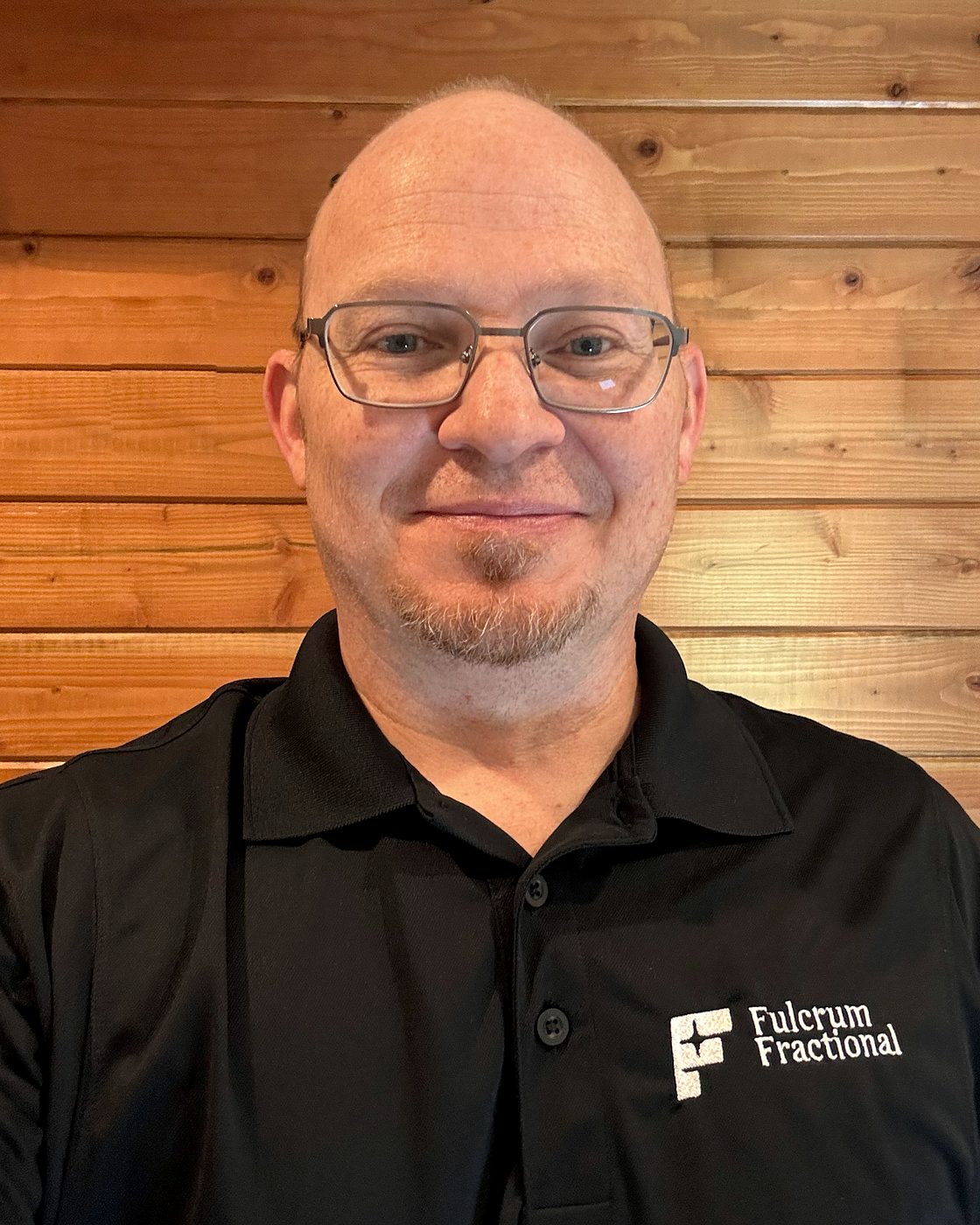
Mark Skalla in Lone Tree, Colorado
Where I am Lone Tree, Colorado, working with founders all over the country. I love the beach as much as the mountains and I've lived near both, but this is the one that stuck.

Can he think?

How I approach the work.
I don't treat marketing and operations as two departments.
They're two halves of one machine, and almost every problem a founder brings me has already crossed between them before I show up. A sales problem that's really a routing problem. An ops problem that's really a wrong-customer problem. Figuring out which side it started on is most of the job.
I teach people to think, not to follow a playbook.
Playbooks fall apart the moment something changes. Judgment gets better with use. When I took a leadership team from nine people down to four, I didn't hand the four a binder. I taught them how to reason about the call in front of them, which is why it held up after I left.
When I'm missing a skill, I go get it.
In 2007 the whole model I'd built a career on stopped working. I didn't defend it. I spent a year inside an SEO agency learning a channel I knew nothing about. That reflex shows up everywhere below, and it's the real reason I can be useful in an industry I've never worked in.
Give me your numbers and I'll find the story in them before the coffee's done.
I love data and I take it in fast. That isn't a party trick. It's the reason the first conversation is usually worth having even if we never work together, because most founders are sitting on the answer already and just haven't had anyone read it back to them.

Has he done it?

Where the experience actually comes from.
I've run a company, not just advised one.
Three years as president of a 75-person business, with the profit and loss in my name. From a $200K loss to more than $600K in profit in two years, inventory losses down 90%, active customer base up 40%. That's not a turnaround I watched. I signed for it.
I've built the marketing myself, not just the strategy deck.
A direct mail program that went from 10,000 pieces a month to over 100,000 a week, plus a custom system I built so that when someone called in, the person answering already had their name and their numbers on screen. It produced $249M in loan volume in eleven months, about 90% of the company's total.
I've been the founder who became the bottleneck.
Six and a half years running my own agency. Clients wanted me, personally. Everyone I trained well eventually left to do it on their own. I raised prices twice and finally sold the client list. I'm not theorizing about this problem. I paid full price for the lesson.

Do I want him around?

Everything you'd know by day ninety anyway.
I'm big on energy and alignment. I loathe negative self-talk and mean people.
I love the work and I throw myself into it, but it's a part of who I am, not all of it. If that reads soft, it isn't. It's the reason I'm useful for years instead of months, and it's the filter I run every engagement through.
I have three or four dozen movie quotes in everyday rotation, and I will use them in your meetings.
The Princess Bride, too good not to know every line of. The Office, where there is a Michael Scott moment for every business situation and I will find it. Three Amigos, a classic, and that is the entire review. Next Generation, because we all wanted Picard to be real. Do not call me a Trekkie. And if Armageddon is on, I'm watching it. No apologies.
I plan my week around bacon cheeseburgers and tacos.
I don't meticulously track macros, but I know them. The burgers and the tacos are the treat, not the daily intake. Which, now that I write it down, is more or less my entire approach to running a business. Know the numbers, design for the exception, stop pretending.
Classic muscle cars and Porsches. Raw power on one end, precision on the other.
Which is not a coincidence. I like both ends of most things. Just as happy running a weekend in Vegas, craps and slots if you're asking, as spending days away from the crowds in Ouray. Just as comfortable doing manual labor all day at my parents' place in Marble Falls as I am at a keyboard.
Curious by default, good with numbers, genuinely terrible at geography.
I can build a computer, program a website from back before there were vibe coders, and set up serious AI automation. I can also drive a CAT and ride a horse. The geography thing is not a bit. It's a real and persistent gap and my family finds it very funny.
I spend at least thirty minutes a day playing with my chihuahua. The dog I didn't want.
I do it because it enriches her life. That's the whole reason. I'm also walking a 5.5 mile daily average this year, which is not a resolution. It's an average.
Before you reach out

I'm not right for everybody, and I'd rather you know now.

Most people keep this list private and spend forty minutes of a first call discovering the mismatch. That's a waste of your afternoon and mine.

We'll probably get along if

  • You can consider that you're part of the problem. Not that you're bad at this. That the thing you built to get here is the thing holding you now.
  • You made the business with your hands. Builders recognize builders. It's the shortest path to actually working well together.
  • You want to make money and you'll say so. No apology necessary.
  • You'd rather be argued with sometimes than agreed with always. I'm more useful as a partner than as a vendor.
  • You're somewhere between $1M and $15M and still founder-led. Below that the math usually doesn't work for either of us. Above it you probably need someone full time, and I'll say so.

We won't, if

  • The name on the résumé is what matters most. I didn't come up through McKinsey, and I'm not going to pretend the pedigree is the product.
  • You want to be told you're right. The work moves you out of the center of your own business, and that's uncomfortable on purpose.
  • You're hiring someone so you don't have to think about it. I can carry the work. I can't do the honest looking for you.
  • You're looking for motivation. There's no hype here. If you want to feel great on a Tuesday, I'm the wrong call.
  • You measure the business by how much it needs you. Then everything I do is going to feel like a threat, and you'd be right.
Working together

Fulcrum Fractional

You're the engine. I'm the supercharger.

A senior operator working inside your business, putting in the systems, the structure and the decision-making that let it run without you at the center of everything. Not a strategy deck. Actual execution, month to month.

For founder-led companies between $1M and $15M. Usually one or two founders, no full-time COO, and a second-in-command who's quietly drowning.

How an engagement runs

Ninety days, built on a five-part framework called the Fulcrum Blueprint. Monthly rather than annual. Embedded rather than scheduled in advance.

You get a senior operator in the business. Not a junior consultant with a senior person's name on the invoice.

How I got here

Every time I needed something I didn't have, I went and built it.

Read it like a core sample. Oldest layer at the bottom, most recent on top.

Now

Fulcrum Fractional.

All of it in one seat, for founders who need a senior operator without a senior salary.

Running the company

Three years in the president's chair, and I wrote a book while I was there.

Seventy-five people and the full P&L. I took a leadership team from nine to four by teaching them to think instead of handing them rules.

My own agency

I built it to scale myself, and got a very expensive education instead.

Six and a half years. Clients wanted me personally, the business never learned to run without me, and I learned the lesson every founder I work with has also learned.

Going solo

The agency pushed me out. Its best clients came with me.

Everyday Health, Tony Robbins properties, Best Rate Referrals. Fifty-plus accounts carried alone.

2007

The model stopped working, so I left it.

A year inside an SEO agency learning a channel I knew nothing about. I wasn't guessing when I promised results. I'd tested it first.

The mortgage years

The mail was working. The people answering the phone weren't ready for it.

The textbook version of the problem I now get paid to find, and where I learned that marketing and operations are one machine.

Podcasts & interviews

Nine shows booked this year. Here's what's out so far.

Hosts publish on their own schedule, so this page only lists episodes that actually exist. The rest are further down, honestly labelled.

The B2B BRAND180

with Linda A. Fanaras

Listen to the episode

Out now

Small Business Pivots

with Michael D. Morrison

Are You the Bottleneck in Your Business? How to Get Unstuck.
Listen to the episode

Out now

The Innovative Agency

with Sharon Toerek

Recorded in August. Airs on Sharon's schedule.

Coming soon

Also booked, recording through October

  • The Friday Habit · Mark Labriola II · September
  • EGGS! The Podcast · Ryan Roghaar and Michael Smith · September
  • Build It To Billions · Brett Swarts · October
  • SaaS Fuel · Jeff Mains · October
  • Owner's Profit Playbook · Pat Mancuso · October
  • The Exit · Steve McGarry · date to come

Want to know when these drop? Get notified

The book

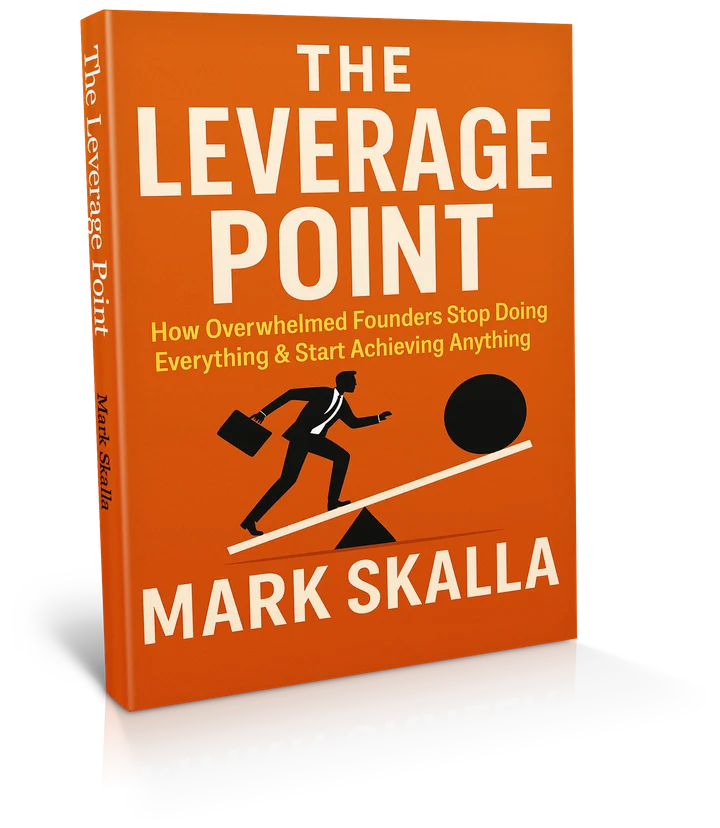
The Leverage Point

The Leverage Point by Mark Skalla, book cover

You're not failing. You've just outgrown the operating system.

From chapter one

I wrote it for the founder who already tried working harder and found out where that road ends.

It isn't a hustle book. It's the same five-part framework I use inside client businesses, in a form you can finish over a weekend and start on Monday. An Amazon bestseller in Consulting and in Business Consulting. Available in print, Kindle and Audible.

Where to go next

Three doors, no wrong one.